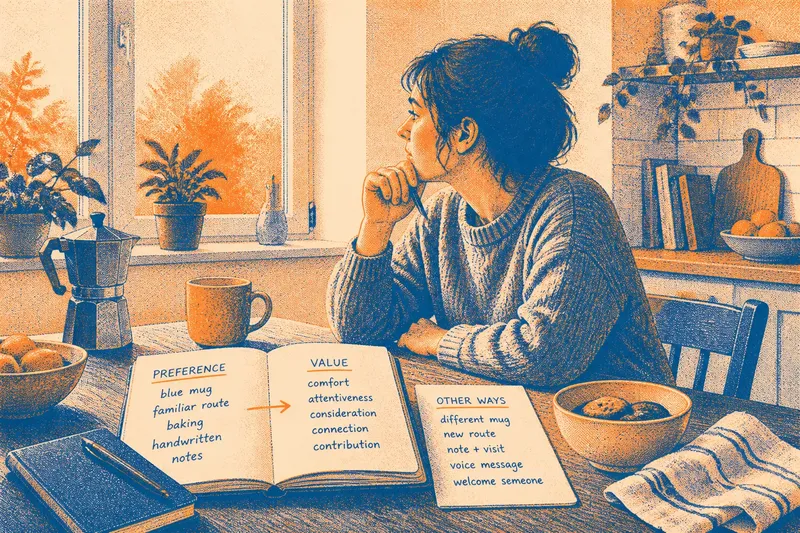
When Handwritten Letters Became a Way to Sound Like Yourself
Handwritten letters make room for a personal voice. Learn how audience, paper, layout and revision shape what a letter can say—and how to find your tone.
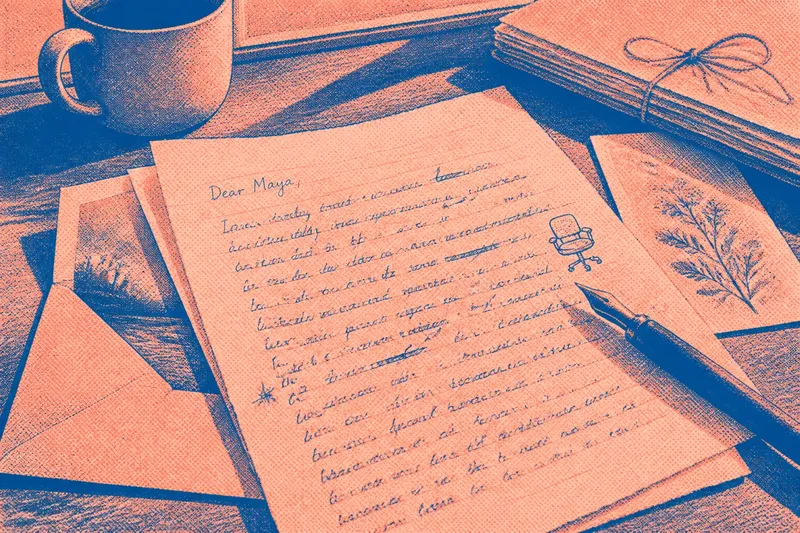
You begin a letter with “Dear Maya,” then pause over the next line. A message on your phone might have been sent already; here, the paper holds the silence while you decide whether to sound brisk, warm, funny or something less easy to name. Handwritten letters can make self-expression feel tangible because the page carries not only words but also the choices around them.
That does not mean handwriting reveals a truer self than speech or a text message. A letter is a particular kind of encounter: addressed to someone, written in a chosen format and shaped by the knowledge that it may be read more than once. Those conditions can bring out a voice that would not fit in a quick exchange.
Why do letters feel personal?
Handwritten letters feel personal because a reader can see evidence of a person making decisions on the page. The slant of the writing, a crossed-out phrase, a small drawing in the margin or a sentence that changes direction all make the act of composing visible. None of these details tells the whole story of the writer, but they give the words a physical setting.
There is also a difference in pace. A letter usually leaves more room for a thought to develop than a short message does. The writer can move from a detail about the day to a memory, then explain why that memory came to mind. The reader can follow that route without needing to answer at once.
The material form contributes too. A folded sheet, a postcard or a page from a notebook creates a different sense of scale. A postcard suggests a small dispatch; several pages can accommodate a longer account. The format quietly sets expectations before the first sentence begins.
How does audience shape your voice?
Audience shapes a letter because writing is not self-expression in a vacuum. You choose what to explain, what to leave implied and which details your recipient will recognise. The same person may sound more playful with a sibling, more careful with a new friend, or more direct with someone who already knows the background.
That adaptation is not necessarily pretence. It can be a form of attention: you are considering what the reader knows and what kind of exchange you are inviting. The risk comes when anticipation takes over completely, so that the letter becomes an attempt to produce a preferred impression rather than to communicate something you mean.
Imagine you are writing to a friend who has moved away, and you want to tell them about a difficult first day in a new job. You might begin with the absurdly squeaky office chair, because the friend knows your habit of noticing small irritations; then you can describe the moment that actually unsettled you. That opening lets humour and candour sit together, while the shared reference gives the account a voice that would feel different in a formal note.
Before you write, it can help to name the relationship in ordinary terms: “This is for someone who knows the story” or “This person needs the context.” Such a sentence is not a script. It is a reminder that tone depends partly on the distance between writer and reader.
Which format suits the message?
The format can support the kind of expression you want, but it also sets limits. Choose one according to the message, the relationship and the amount you genuinely want to say.
- Postcard: Useful for a brief observation, greeting or scene from a place. The small writing area encourages selection, though the message is less private than a sealed envelope.
- Folded note: A good fit for a personal message that is short enough to keep focused but deserves more space than a card. A plain sheet of writing paper works just as well as a decorated one.
- Several pages: Suits a story or reflection with several connected parts. Paragraph breaks help the reader follow shifts in time or subject.
- Letter with an enclosure: A photograph, recipe card or pressed drawing can add another point of contact. Include it because it belongs to the message, not because every letter needs an extra object.
Paper and pen matter chiefly as practical choices. A fine-tip pen may suit small handwriting; a broader nib can make a page feel more open. If the ink smudges or the paper is uncomfortable to write on, a different combination may let you concentrate on the words rather than wrestling with the surface. Follow the stationery maker’s care guidance where it applies.
Layout also affects how a letter sounds. A dense page can make even a friendly message seem weighty, while short paragraphs create pauses. A greeting and sign-off establish a frame, but neither needs to be elaborate. “Hi Sam” and “Take care” can carry genuine warmth when the rest of the letter is specific.
How can you sound natural?
To sound natural, write towards a real thought instead of trying to manufacture a distinctive style. Begin with something you can actually picture or remember: a conversation on the bus, a recipe that went sideways, the sound of rain against the kitchen window. Concrete material gives your voice somewhere to stand.
If the opening feels stiff, try writing a private first sentence that you will not send. It might be blunt, awkward or overly earnest. Then ask what part of it is worth keeping. Often the useful idea survives once the performance falls away.
Use the words you would say to this person, while allowing for the fact that a page invites more shaping than conversation. You can keep a favourite expression, a dry aside or a sentence that takes a little detour. You can also remove a flourish that sounds borrowed. The aim is not to transcribe speech exactly; it is to recognise the voice beneath the posing.
Handwriting itself need not be neat to count as expressive. If legibility is a concern, slow down, leave more space between lines or use larger letters. There is no need to decorate a page unless decoration feels like part of the message. A clear, plain letter can be more recognisably yours than one dressed in a style you do not enjoy.
Should you revise a handwritten letter?
Yes, if revision helps you say what you mean; no, if polishing turns the letter into a performance. Handwriting makes edits visible, so it can be tempting to start again whenever a line looks untidy. A crossed-out word is usually just evidence that you changed your mind, not a flaw the recipient needs explained.
Read the letter once for meaning rather than appearance. Check whether the recipient can follow the story, whether a vague reference needs context and whether the tone fits what you want to communicate. If a sentence feels unlike you, revise it; if it is simply imperfect, consider leaving it alone.
For sensitive or consequential news, pause before sending. A handwritten page may be kept, shared or read long after the moment of writing. Think about what you want the recipient to understand and whether a letter is the right medium for that conversation. Where a matter involves safety, legal obligations or another specialist concern, seek appropriate professional advice rather than relying on a personal note alone.
What do readers ask about letters?
Do handwritten letters have to be long?
No. A few specific sentences can feel complete if they carry a clear greeting, one meaningful detail and a natural close. Length matters less than whether the message gives the reader something real to respond to or remember.
What if my handwriting is messy?
Messy handwriting does not disqualify a letter from being personal. Leave generous spacing, choose a pen that feels comfortable and keep sentences easy to read; if the recipient may struggle with handwriting, a typed letter can still carry a considered voice.
Is it odd to write to someone I see often?
Not necessarily. A letter can give an ordinary relationship a different kind of attention, especially when you want to express something that gets crowded out in daily conversation. A short note left somewhere they will find it can feel more natural than a formal envelope.
What should I write about if nothing dramatic happened?
Start with a small detail you would normally skip: a new route home, a neighbour’s unusually cheerful dog or a meal you keep thinking about. Then add why it caught your attention, so the letter offers more than a list of events.
What can a letter hold?
A letter can hold uncertainty as well as a finished thought. You do not have to turn every feeling into a lesson or tie every story into a tidy ending. A sentence such as “I’m still working out what I think” can be direct, provided it is an honest account of where you are.
It can also hold a particular kind of attention. Naming something the recipient once told you, asking about a detail in their life, or returning to a shared memory shows that the letter is shaped by this relationship rather than addressed to an imaginary audience. Keep the reference clear enough that the reader can meet you there.
When handwritten letters become a way to sound like yourself, it is often through small choices rather than grand declarations: the detail you select, the form you choose and the amount of explanation your reader needs. Before sealing the envelope, read the page and ask one useful question: does this sound like something I mean to say to this person? If it does, a smudge or an uneven line can stay exactly where it is.